Quechee State Park: Standing on the Edge of Vermont's Little Grand Canyon
A mile-long, 165-foot-deep glacial gorge, a 1911 steel arch bridge, and 688 acres of trails, campsites, and river — Quechee State Park is the Upper Valley's signature natural wonder.
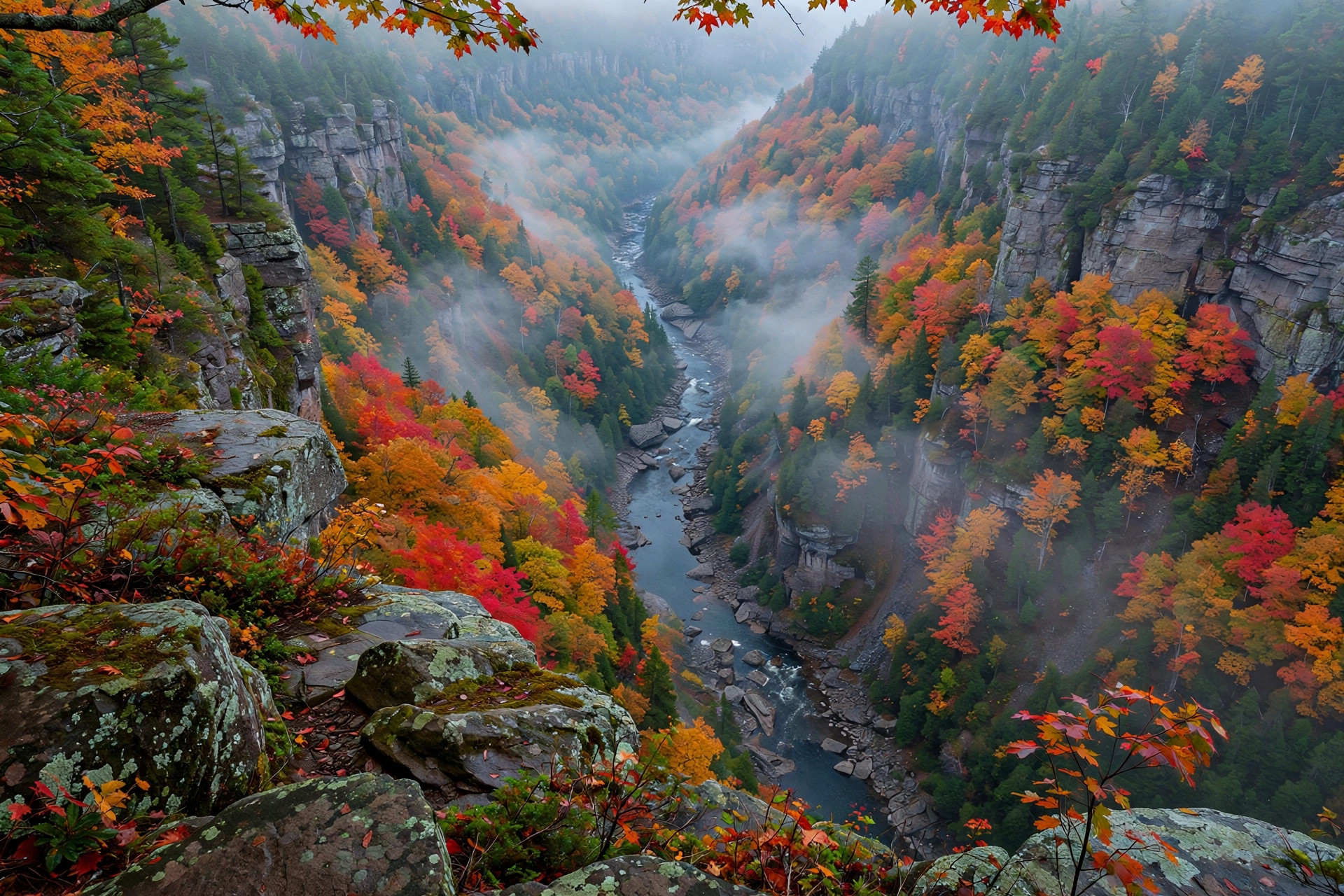 AI-generated illustrative image
Most visitors experience Quechee Gorge the easy way first: standing on the sidewalk of the Route 4 bridge, looking straight down 165 feet into the Ottauquechee River as it threads a mile-long canyon through solid bedrock. It is a stunning introduction. But the real move — the one that turns a photo stop into a memory — is to walk into Quechee State Park, find the gorge trail, and descend into the canyon itself, where the river is cold and loud and the walls close in around you.
Quechee Gorge is often called Vermont's Little Grand Canyon, and the nickname is earned. The gorge is roughly a mile long and 165 feet deep, carved through Devonian-era bedrock that predates everything else in the valley. It was born about 13,000 years ago, when the Laurentide Ice Sheet retreated from New England and glacial Lake Hitchcock began to drain. The escaping torrents cut through the bedrock in a geological blink — on the order of a thousand years — leaving the chasm you see today, with ancient volcanic dikes still visible in the rock on the west side.
The bridge that most people stand on is a landmark in its own right. Built in 1911, the Quechee Gorge Bridge is a 285-foot-long steel arch span standing 163 feet above the river — Vermont's oldest surviving steel arch bridge, listed on the National Register of Historic Places in 1990. It carries two lanes of Route 4 traffic, but the pedestrian walkways on both sides are the real attraction: the easiest and most dramatic gorge viewpoint in the state, free to anyone who walks across.
The land beneath the park has its own layered history. In the 19th century this was the site of the A. G. Dewey woolen mill, which employed up to 500 local workers from 1869 until 1952, when the operation moved to New Hampshire. Shortly after, the U.S. Army Corps of Engineers acquired the property as part of its regional flood control plan. Vermont leased the land back — about 688 acres of fields, river, pond, and woodlands — and in 1965 Quechee State Park was born. A hydroelectric dam still sits at the north end of the gorge, a quiet reminder of the river's working past.
Today the park is one of the most visited in the Vermont state park system, and it is easy to see why. The campground offers 45 tent and trailer sites plus 7 lean-to sites, with showers, a dump station, a large field and play area, and a picnic area right beside the gorge. The trail along the upper edge of the canyon drops down to the riverbanks below — a short, steep, entirely manageable hike that most visitors can handle. In summer, when the Ottauquechee calms down from its spring run, the brave swim in the gorge's cold, clear pools.
Anglers know the river for its rainbow, brook, and brown trout, and the park's woodlands and riverbanks are prime wildlife watching — herons, kingfishers, and the occasional bald eagle patrol the gorge. Photographers and painters set up along the rim in every season, but autumn is the gorge's true high season, when the foliage turns the canyon into a frame of red and gold and the bridge walkways fill with leaf-peepers from around the world. Winter has its own stark beauty too, with the park officially listing winter sports among its activities, though the campground itself sleeps until spring. Fair warning: peak summer days and fall weekends can be genuinely crowded on the bridge. Locals will tell you to come early in the morning for the quiet version — mist on the river, the light raking across the rock, and the canyon nearly to yourself.
The park's season runs from mid-May to mid-October, with day use generally open from 10 a.m. to sunset. It sits on US Route 4 in Quechee, a village of the town of Hartford, about three miles west of the I-89 interchange — an easy add to any Upper Valley itinerary. And the surroundings reward lingering: Quechee Gorge Village's antique and craft shops cluster just outside the entrance, complete with an old-fashioned merry-go-round that delights kids, and the area has grown into a proper little tourist hub of gift shops, restaurants, and motels along Route 4.
Just across the river, the Simon Pearce flagship — the famous glassblowing and pottery works — lets you watch artisans at the furnace before browsing the showroom, and the Vermont Institute of Natural Science (VINS) nature center, minutes away, is one of New England's premier raptor rehabilitation and education centers, with live eagles, owls, and falcons on display. Pair those with the gorge and you have a full day without moving the car more than a few miles.
Practical tips matter here. Wear real shoes for the gorge trail, not flip-flops — the descent is steep in spots. Bring a swimsuit in July and August if you want the full experience. If you're camping, book ahead in peak season; the lean-tos in particular go fast. And if you're only passing through on Route 4, at least pull over and walk the bridge. It costs nothing, takes ten minutes, and delivers one of the single best views in Vermont.
There are prettier places in Vermont, and there are wilder ones. But there is nothing quite like Quechee Gorge anywhere else in the state — a 13,000-year-old wound in the bedrock, humming with a river that has never stopped working, wrapped in a state park that makes it all accessible to anyone with an afternoon to spare. Go down the trail. The view from the top is only half the story.