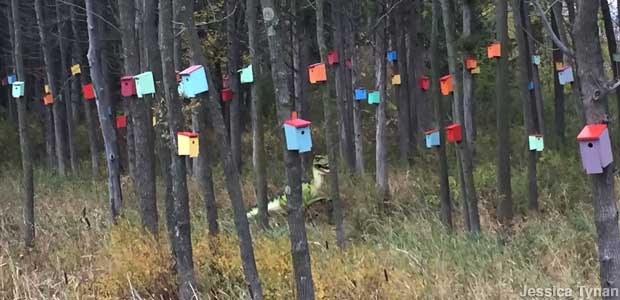
Drive West Shore Road in South Hero on a spring morning and you'll think you've wandered into a fairy tale: hundreds of birdhouses in jelly-bean colors — cherry red roofs, lemon yellow, sky blue, lime green — mounted on posts along the roadside, stretching as far as you can see. There are around a thousand of them, give or take a hundred. Every one of them has tenants. And every tenant pays rent in mosquitoes.
The story starts in 1996, and it's mostly a practical story about what it's like to live next to a swamp. Two neighbors, Hank and Jay, decided they'd had enough of the mosquitoes. But instead of reaching for the spray rig, they did some research — and learned that tree swallows love wetlands.
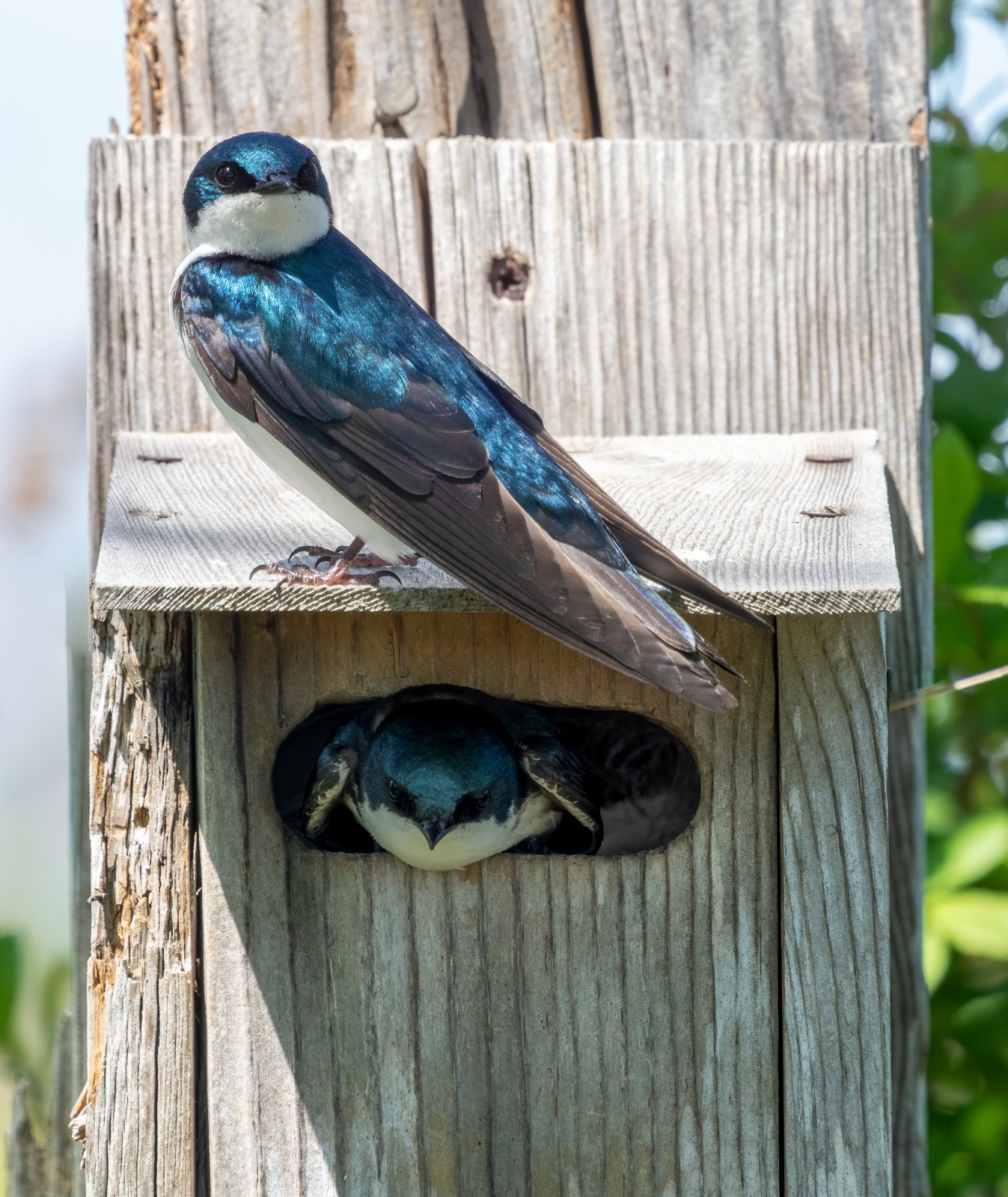
It was a shrewd bit of homework. Tree swallows (Tachycineta bicolor) are aerial insectivores that migrate to Vermont each spring, and a single bird scoops up flying insects — mosquitoes among them — by the hundreds every single day. Better yet for Hank and Jay, swallows are cavity nesters: in open wetland country, where old trees with woodpecker holes are scarce, a well-built birdhouse isn't a decoration, it's prime real estate. Put up the houses, and the mosquito patrol arrives on its own wings.
So the two neighbors built 20 birdhouses — and they built the right kind: a plain wooden box about five inches square, a single round entrance hole an inch and a half across, a sloped roof, up on a post facing open country near water. No perch under the hole. Paint the outside if you like; the birds don't care, though in South Hero the paint became half the point.
Then their wives looked at 20 plain wooden boxes and said the words that changed everything: "Why not paint them in bright colors with red roofs?" And that's how it started.
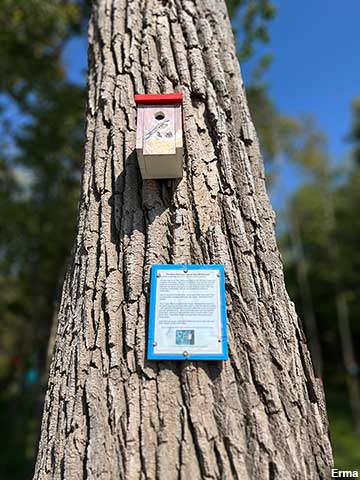
The first year, birds occupied every single house. That shouldn't have been a surprise — tree swallows return to the same breeding area year after year, so a good address only gets better with time. But it must have been something to see: twenty candy-colored houses, twenty families of swallows, and noticeably fewer mosquitoes.
Then came the part nobody planned. Over the next 30 winters, with generous donations of wood and paint from local contractors and the hardware store, Hank and Jay just kept building. A few dozen more each off-season. Then a few dozen more. Every April, swarms of tree swallows returned to build nests in their South Hero "Jelly Bean Suites" and pay their rent by devouring mosquitoes.
Today there are around 1,000 of the colorful birdhouses near White's Beach on West Shore Road — a three-decade community art project that also happens to be one of Vermont's most effective mosquito-control programs. Nobody sprayed anything. Nobody passed an ordinance. Two guys built boxes, their wives picked the paint, and the swallows did the rest.
Somewhere along the way, the birdhouses became a destination in their own right. They've been featured on Boston and Vermont television, they turn up on roadside-attraction maps, and drivers on West Shore Road slow down just to take them in. Keep an eye out and you'll spot dinosaur sculptures hidden among the trees too — because of course there are.
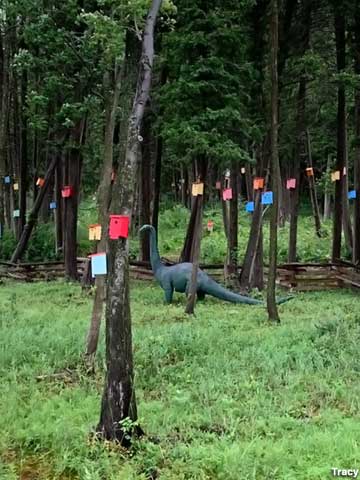
The setting earns the drive. White's Beach is town-owned shoreline on Lake Champlain, and the whole area is a known birding hotspot — the swallows are just the most colorful residents. Come in late April or May and you'll catch the swallows' return at its peak, the houses freshly claimed and the air full of wings. Summer works too; by fall the tenants have headed south and the Jelly Bean Suites sit quiet, waiting out the winter like everything else in Vermont.
Practically speaking: the birdhouses stand on the north side of West Shore Road in South Hero, just east of its intersection with Lake View Road, near White's Beach. A small boardwalk leads from the road into the birdhouse trees, and there's a small parking area just east of the boardwalk. It's private property but fully visible from the road — drive it slow, park in the pull-off, bring a camera. There are no facilities and no gift shop, which is exactly as it should be.
Thirty years, a thousand birdhouses, and a mosquito problem solved the Vermont way: with neighbors, donated lumber, bright paint, and birds. Hank and Jay set out to battle mosquitoes. What they built was a landmark.