Stratton Mountain Resort: The Mountain That Changed Snowboarding
Opened in 1961 on southern Vermont's highest peak, Stratton was the first major resort to welcome snowboarding and hosted the U.S. Open for nearly three decades.
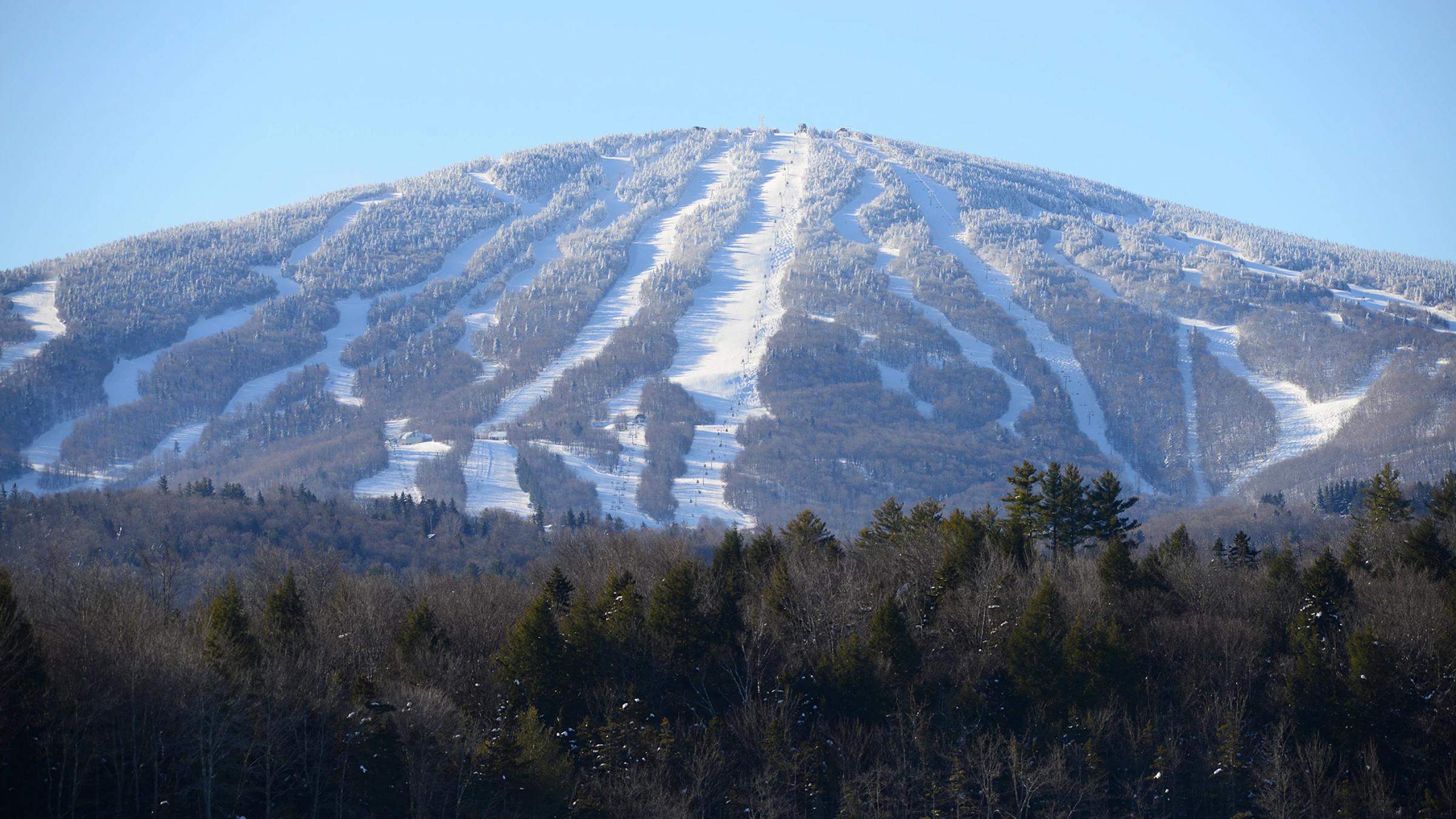 Photo: Stratton Mountain Resort
On December 29, 1961, three double chairlifts started turning on a mountain in southern Vermont, and American skiing would never be quite the same. Stratton Mountain Resort grew from that modest opening into one of the East's great ski resorts — and along the way, it became the birthplace of lift-served snowboarding culture in America, a claim no other mountain on the continent can make.
The early years were all hustle and optimism. Stratton's opening-day infrastructure consisted of those three chairlifts and a three-story base lodge; the access road was such a disaster that it was paved in 1962 before the second season even began. A major expansion followed for the 1964–65 season with the opening of the Snow Bowl, adding a double chairlift and more than thirty acres of new terrain. The mountain was top notch from the start — it just needed the road, and the lifts, to catch up with the ambition. Two T-bar lifts arrived for the 1963 season, and the Snow Bowl expansion of 1964–65 cemented Stratton's place as a serious destination on the East Coast ski map.
By the late 1960s, Stratton was taking on a European flavor that still shapes its character today. For the 1966–67 season, a group of Austrian ski instructors known as the Innsbruck Trio began performing European-style après-ski entertainment at the resort, singing and playing for the crowds at the base lodge. The group became the Stratton Mountain Boys and a key part of the mountain's marketing, cementing Stratton's reputation as a resort with sophistication. Their Tyrolean spirit still echoes in Stratton's après-ski culture today — Alpine soul grafted onto the Green Mountains, with oompah and ski boots in equal measure.
Today Stratton is a full-scale resort with the stats to match its reputation: 97 trails spread over 600-plus acres, served by 16 lifts including four high-speed six-passenger chairs and an enclosed 12-passenger summit gondola. The vertical drop runs about 2,000 feet from the 3,875-foot summit — the highest peak in southern Vermont — and Stratton sits squarely in the heart of Vermont's famed snowbelt, where natural snowfall piles up deep and the grooming is famously meticulous. Two base lodges, at the Main Mountain and the Sun Bowl, keep skier services close at hand.
The mountain's proudest chapter is snowboarding. Jake Burton built his first snowboard while living in nearby Manchester, and Stratton became the first major ski resort to welcome snowboarding — a bold move in an era when most areas banned the new sport outright. The relationship grew into the Burton U.S. Open Snowboarding Championships, which Stratton hosted from 1985 through 2012, nearly three decades of the sport's defining event, before it moved to Colorado in 2013. Olympic halfpipe gold medalist Ross Powers and snowboard cross star Lindsey Jacobellis both came up through Stratton's programs.
Stratton's list of firsts goes well beyond snowboards. The resort hosted the first World Cup ski race ever held in Vermont, flew lift towers in by helicopter, built a medical clinic at the base of the mountain to care for injured skiers, and established one of the first ski racing academies in the country. That academy, the Stratton Mountain School — founded in 1972 as a winter tutorial program for young racers — has produced dozens of Olympic competitors and multiple Olympic medalists, a pipeline of talent unmatched anywhere in the East.
The resort's Village is the social heart of a Stratton visit, with dining, lodging, shops, and entertainment clustered around the base in a lively pedestrian scene that hums from first chair to last call. The Village's restaurants keep the energy going after the lifts close, from family pizza nights to upscale dinners — a full evening scene, not an afterthought. Stratton is a genuine four-season resort: the golf course was designed by noted architect Geoffrey Cornish, with a golf school established by Arnold Palmer in 1969, and the Stratton Nordic Center offers more than 35 kilometers of tracked cross-country trails plus 50 kilometers of backcountry terrain for winter explorers who want a change of pace from the downhill.
On the snow, the mountain delivers variety in every direction. Average snowfall runs about 180 inches, supplemented by extensive state-of-the-art snowmaking, and the trail network mixes cruisers, steeps, glades, and terrain parks across the main mountain and the Sun Bowl. Families love the gentle learning terrain and the ski school's proven programs, while experts head for the steeps and the trees. The resort rides on the Ikon Pass, which makes Stratton an easy add-on for travelers already headed east and a compelling home mountain for pass holders across New England.
Practical details are straightforward: find the resort at 5 Village Lodge Road, Stratton Mountain, VT 05155, in southern Vermont east of Manchester. Full details on tickets, lodging, lessons, and the season calendar live at stratton.com. The Village fills up on peak weekends, so book lodging early if you are coming for the holidays or chasing a powder storm — and save some energy for the après, which has been a Stratton tradition since the Austrian days of the Mountain Boys.
From three chairlifts to an icon of American snow sports, Stratton's story is the story of how a southern Vermont mountain helped invent modern skiing culture. Come carve the trails, ride the gondola to the highest peak in southern Vermont, and soak up the Austrian-flavored après. The mountain that welcomed snowboarding has been welcoming everyone else ever since.