Woodstock Inn & Resort: The Grand Dame of the Village Green
A Laurance Rockefeller-built landmark anchoring what many call the prettiest small town in America — with a working organic farm, a landmark spa, and golf minutes from the Green.
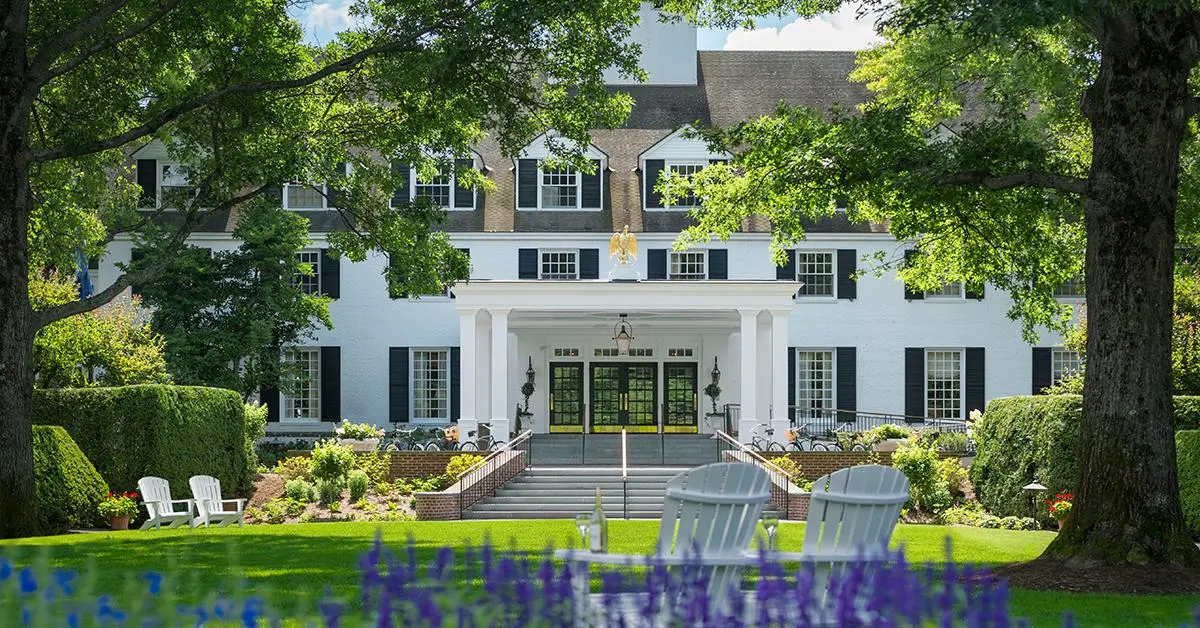 Photo: Woodstock Inn & Resort
There are grand hotels, and then there is the kind of hotel that simply is the town. Stand on Woodstock's Village Green on a foliage-season morning, with the covered bridge in the distance and the Ottauquechee River moving slow and brown-green past 18th-century colonials, and the big white-shingled edifice anchoring the scene is the one and only Woodstock Inn & Resort. It is not merely Woodstock's flagship lodging. It is, in a very real sense, the engine that made Woodstock the Woodstock everyone knows — the postcard, the day-trip destination, the "prettiest small town in America" that guidebooks love to crown.
The story of the inn starts long before the current building. The site has hosted travelers since 1793, when Captain Israel Richardson opened Richardson's Tavern on this spot. A grand Shingle Style hotel called the Woodstock Inn replaced earlier structures in 1891 and helped turn Woodstock into Vermont's first winter sports destination — famous winter parties, snowshoeing, skating, and sleighing for out-of-town guests. But by the 1960s the old inn was struggling, and that is when one of the most remarkable rescue acts in Vermont hospitality history took place.
In 1969, Laurance S. Rockefeller — grandson of John D. Rockefeller and husband of Mary Billings, granddaughter of Woodstock dairy farmer and forestry pioneer Frederick Billings — purchased the property. The 1891 structure was beyond saving, so Rockefeller did something audacious: he built an entirely new inn in a traditional New England style, set back a little farther from the Green, and opened it in November 1969. When he sold his Rockresorts hotel group in 1986, the Woodstock Inn was the one property he kept — a measure of how deeply the Rockefellers' conservation vision was tied to this one small Vermont town.
What Rockefeller understood, and what still defines the inn today, is that a great country hotel is never really about the rooms, though the rooms are lovely. It is about being the social and physical center of a place. The main lobby's ten-foot fieldstone fireplace is where half the town seems to pass through on a winter evening. The library, paneled in barn wood, hosts an eternally occupied chessboard. Richardson's Tavern, the cozy bar named for the inn's 1793 founder, serves light fare within walls that feel centuries older than the 1969 building — a deliberate act of architectural storytelling.
For skiers, the inn's position is almost unfair. The Woodstock area is where American skiing grew up: the first rope tow in the United States was installed on nearby Gilbert's Hill in 1934, and Mount Tom rises right behind the village, hikeable in summer via Faulkner Park with a sweeping valley view at the top. Today the inn sits minutes from Saskadena Six, the beloved local ski area, and within easy reach of Killington and Okemo. Golfers get the Woodstock Country Club, a five-minute walk from the lobby. In other words, the inn is a four-season base camp wearing a grand hotel's evening clothes.
Food is a pillar of the operation, and it is rooted in actual soil. The Red Rooster, the inn's acclaimed restaurant, draws heavily from Kelly Way Gardens, the resort's own certified organic farm, where more than 200 varieties of vegetables, 50 varieties of herbs and edible flowers, 200 types of cut flowers, and 75 varieties of berries and orchard trees grow around a mushroom glen. Guests can walk the gardens from May through October — and taste the difference at dinner. It is farm-to-table not as a slogan but as a supply chain you can stroll through.
The wellness side of the resort is equally serious. A 10,000-square-foot full-service spa sits off the maple-lined back courtyard, accessible directly from the inn — the kind of amenity list (sauna, steam, treatment rooms, fitness) that would feel at home in a city five-star, delivered here with the hush of the Vermont countryside. After a day on the slopes or a morning hike up Mount Tom, there are few better combinations in New England than a treatment here and a fireside drink in the lobby afterward.
Step outside and the inn hands you Woodstock itself. The village is a working museum of New England town planning: the Green, the covered bridge, the independent shops and galleries, an independent bookstore going back generations. Two of Vermont's most important cultural sites sit within minutes — Billings Farm & Museum, the working dairy farm founded by Frederick Billings, and the Marsh-Billings-Rockefeller National Historical Park, the country's only national park devoted to conservation history. The inn was literally built by the same family story those places preserve.
Practically speaking, the inn is an easy anchor for a trip. It sits at 14 The Green in the heart of Woodstock village (05091), with 142 rooms and suites, on-site dining from the Red Rooster to the casual tavern, and a staff famous for remembering your plans and asking about them later. Rates put it in the luxury tier — this is a special-occasion stay, not a crash pad — but everything a visitor needs for several days in the Upper Valley is either inside the building or within a short walk or drive.
The deeper reason the inn matters, though, is what it represents — and what you're buying into when you stay. Laurance and Mary Rockefeller didn't just buy a hotel; they bought into the idea that a small Vermont town was worth preserving as a living place rather than embalming as a museum. So when you book a room here, you're not just booking luxury comfort (though you get that too); you're booking the center of Woodstock's gravity: the farm, the spa, the golf course, the tavern, the trailheads, the museums, all radiating from one block of the Green. Few hotels in New England earn the word "iconic." This one did it the hard way — by rebuilding a town's confidence along with its own walls.