Latchis Theatre: Brattleboro's Greco Deco Movie Palace Still Steals the Show
Since 1938, the Latchis Memorial Building has stood as one of Vermont's only Art Deco landmarks, its Greek-deity murals and terrazzo floors making a night at the movies feel like an occasion.
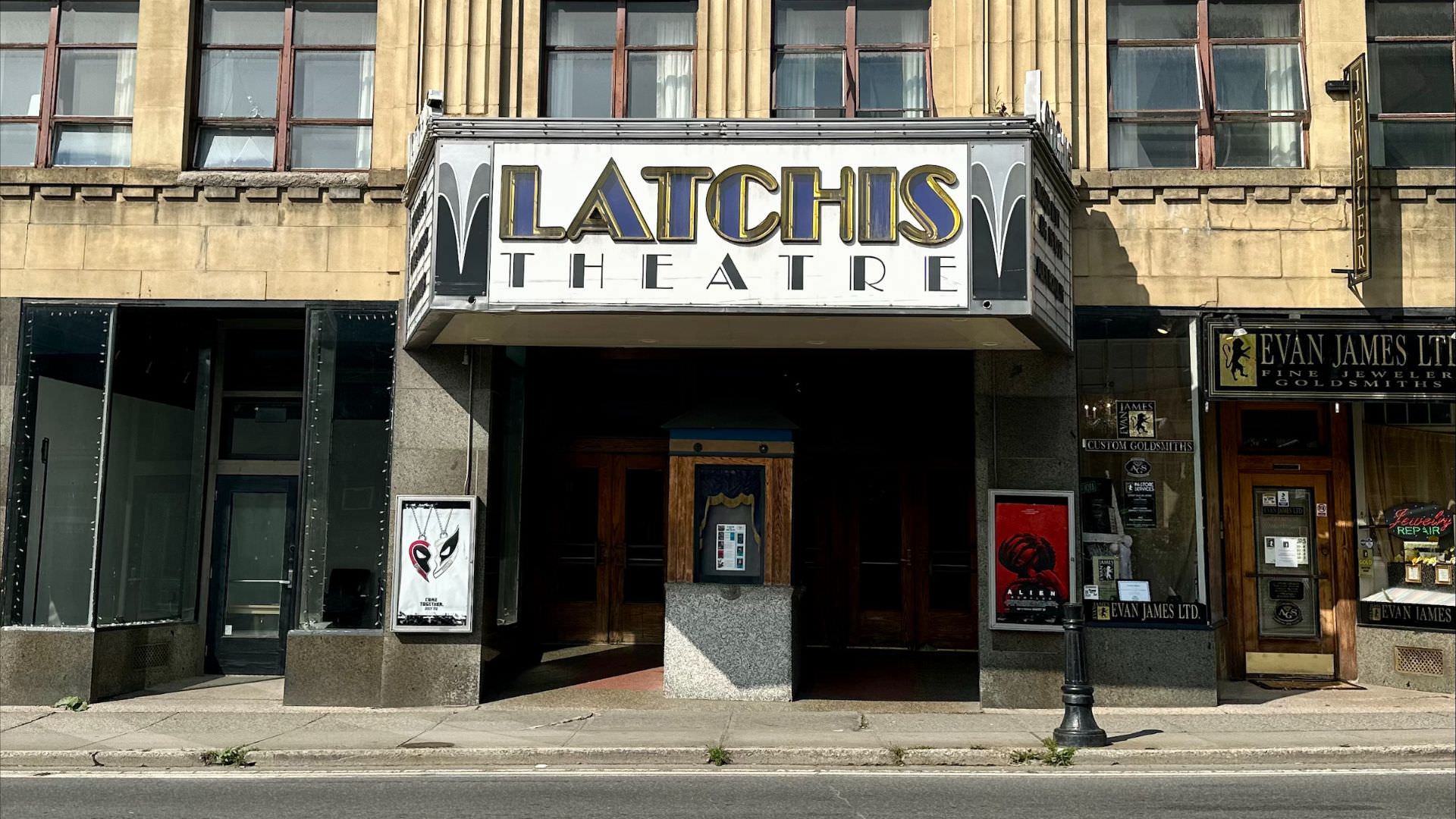 Photo: Latchis Hotel
There is a moment, just after dusk in downtown Brattleboro, when the marquee of Latchis Theatre flickers on and the whole block seems to lean in a little closer. The facade glows, the tall marquee letters spell out tonight's films, and you can almost hear the train horn crossing Bridge Street the way moviegoers heard it in the 1930s. Few small-town cinemas in America still feel like an occasion, and fewer still look the way the Latchis looks, all stepped-back Deco geometry with a Greek twist that gives the building its nickname: Greco Deco.
The Latchis opened in 1938 as the Latchis Memorial Building, built by four brothers in honor of their father, Demetrius P. Latchis, a Greek immigrant who had worked his way into the ranks of Brattleboro's most prominent businessmen. The family ran a chain of fourteen theatres across New England, and for the memorial they wanted something grand enough to do justice both to their father and to their old-country roots. The architect was S. Wesley Haynes, and the result was a building designed from the start to hold a hotel, a theatre, a ballroom, a restaurant, a bar, and a row of storefronts, the beating heart of a downtown.
Step inside and the Greek Deco character takes over. The brothers commissioned Hungarian-born muralist Lajos Jambour, credited in theatre histories as Louis Jambour, to paint murals of Greek deities across the main auditorium, and they set statues of the gods into the terrazzo-floored interior. Hebe, the goddess of youth and cupbearer to Zeus, still guards the entrance to the main hall. It is an extraordinary interior for a town of this size, and preservationists rank the building among the half dozen most important Art Deco buildings in Vermont, one of only two high-style Deco theatres in the state.
The site had show business in its blood before the Deco renovation. An auditorium on the block had been built as a factory in 1900 and opened as the 500-seat Latchis Theatre on April 13, 1920, with a Douglas Fairbanks picture on the screen. By 1926 it was listed as the Latchis Opera House. Then came the full 1938 reinvention, and the renovated Latchis Memorial Theatre reopened on September 22 of that year with Sonja Henie in My Lucky Star plus a stage show, a glittering 1,140-seat movie palace that announced Brattleboro as a serious picture town.
For decades the formula worked. The theatre drew strong crowds through the 1960s, then sagged with the rest of downtown in the 1970s. But the building survived the lean years, and in 2003 the Brattleboro Arts Initiative, a local nonprofit created to save the landmark, completed a major capital campaign and purchased the hotel and theatre outright. The nonprofit ownership model kept the marquee lit and the mission cultural rather than purely commercial, and in 1983 the building had already been listed on the National Register of Historic Places.
Few chapters of the Latchis story are told locally with more pride than the Irene flood of 2011. Tropical Storm Irene inflicted some $600,000 in damage on the building, yet the staff and volunteers got the doors reopened just 46 days later, with some 2,000 people pouring through during the reopening weekend. A later $500,000 fundraising campaign paid for further restoration work, and the result is a building that shows its age in the way a well-loved violin does, not as decay but as patina.
Today the Latchis is a working four-screen cinema, and it programs with the confidence of a much bigger-city house. The screens carry first-run pictures alongside arthouse and independent films, and the calendar mixes in Met: Live in HD opera broadcasts, documentary one-nighters, and community screenings like the Labor Film Festival and special Vermont-filmmaker premieres. The programming keeps one foot in Hollywood and the other firmly in Windham County, which is exactly the balance the Arts Initiative set out to strike.
The theatre also serves as downtown's de facto civic living room. Over the years it has hosted the Brattleboro Music Center, the Vermont Jazz Center, the Brattleboro Literary Festival, the Brattleboro Film Festival, the Women's Film Festival, and countless Rotary luncheons, chamber events, and school fundraisers. On any given week the building might hold a documentary premiere, a silent-film screening, and a crowd-pleasing blockbuster, and the audience crossing the lobby for each will look entirely different, which is rather the point.
Planning a visit is easy, and it rewards being made part of a whole downtown evening. The theatre stands at the center of Brattleboro's walkable Main Street corridor, with the Connecticut River and the marquee-lined restaurants and pubs a short stroll away. Arrive early and you can browse the independent bookshops and galleries, grab a locally roasted coffee, then take your seat under the Greek gods. Parking is available in the town lots within a block or two, and the weekly film listings are posted on the theatre's website along with special-event tickets.
Brattleboro is the kind of town where people choose to live precisely because of places like this, and the Latchis repays the loyalty. It is not a museum piece and it is not a multiplex; it is a working 1938 movie palace where the terrazzo still gleams, the murals still loom, and the audience still hushes when the lights go down. On your next trip through southern Vermont, buy the ticket, take the balcony if you can, and let Brattleboro's greatest stage do what it has done for generations: make a simple night at the movies feel like going somewhere.