Paramount Theatre: Rutland's Gilded Stage Roars Back to Life
Built in 1913 as The Playhouse and restored to its Victorian-opera-house glory in 2000, Rutland's Paramount Theatre hosts concerts, comedy, and Broadway tours at 30 Center Street.
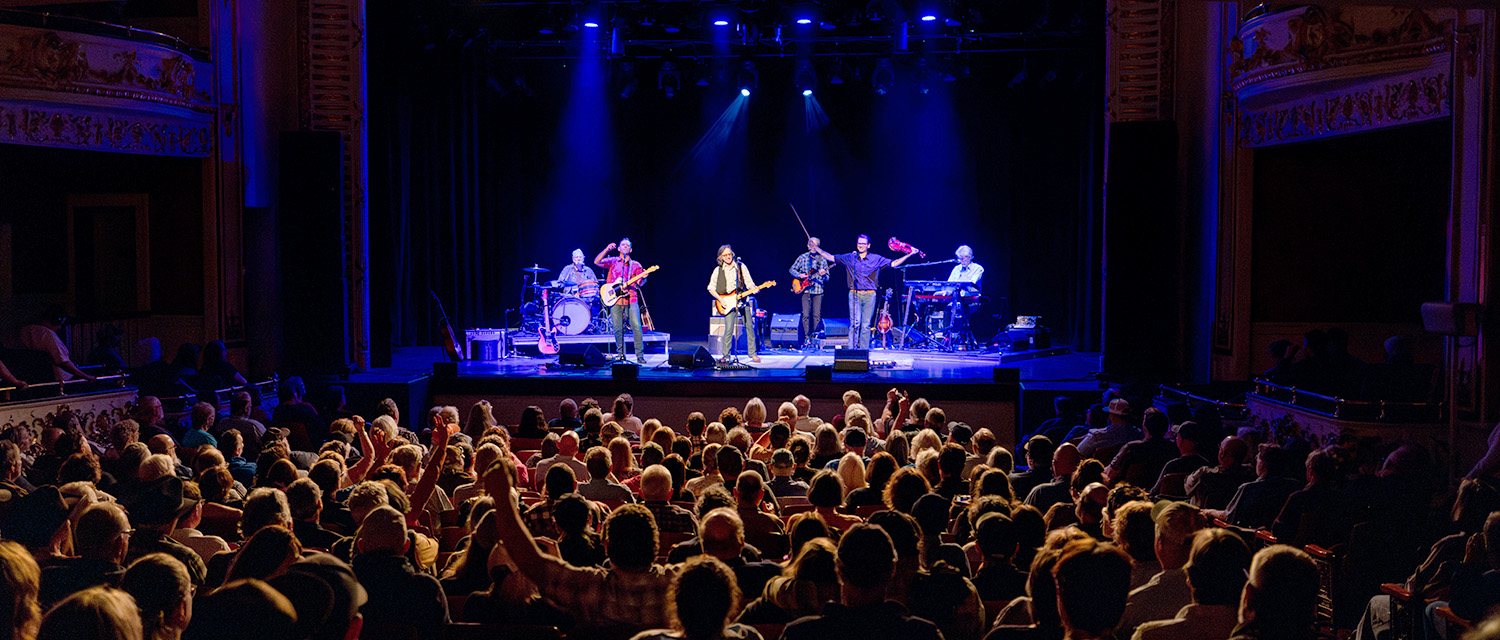
On Center Street in downtown Rutland, behind a classical facade that has watched over the city for more than a century, gold light still spills from a restored opera house that refused to die. The Paramount Theatre is the grand old stage of Rutland County — a place where vaudeville once shared billing with Houdini, where Gone with the Wind once packed the house, and where the city's cultural life still gathers on any given weekend, from rock concerts to Broadway tours.
Built in 1912 and 1913 by local businessman George T. Chaffee, the theatre opened on January 16, 1914 as The Playhouse. In its early years many called it one of the finest theatres in America, and few houses anywhere were more artistically designed or appointed. The classical-style exterior reflected the City Beautiful movement of the era, while the interior took on the full opulence of a Victorian opera house. It seated 1,000 patrons in the orchestra, the balcony, and six boxes flanking the proscenium arch — an astonishing jewel box for a small New England city riding the wealth of the marble industry.
The details inside were extraordinary, and they still are. Du Barry rose tapestry covered the side walls, and velour hangings of the same shade adorned the boxes. The ceilings glowed with gold leaf and a large oval painting representing music, lyric art, and drama, all lit by 150 softly glowing incandescent ceiling lights. The floors of the auditorium, aisles, boxes, and lobby were carpeted in green wilton. Walking in today, after the meticulous restoration, is the closest most of us will get to time travel — the pink fabric, the wood-frame seats, the gold filigree, all of it.
Location made The Playhouse a stop on the touring circuit. Performers traveling the Rutland Railroad between Montreal and Boston would step off the train and onto the stage, making Rutland an unlikely regular on the great vaudeville routes. Minstrel shows, grand and light opera, and appearances by legends of the age — Tom Thumb, Will Rogers, Sarah Bernhardt, Ethel Barrymore, and The Great Houdini — delighted local audiences who otherwise might never have seen such acts outside a major city. Rutland, for a few glittering decades, was on the map.
The theatre served the city in crisis, too. During the disastrous flood of 1927, while water lapped at the building's foundation, the theatre opened its doors as a refuge for Rutland residents driven from their homes in the lower parts of the city. It is a quieter chapter of the building's story, rarely mentioned in the playbills, but one that still colors how locals talk about the place — as something that belongs to the community, not just to the arts, a civic living room as much as a stage.
When talking pictures arrived, The Playhouse embraced the new era and was renamed The Paramount in 1931. Presentations alternated between talkies and vaudeville for a while, until film finally supplanted live performance in popularity. The Paramount screened the great movies of the 1930s — Gone with the Wind among them drew huge audiences — and carried Rutland through the mid-century golden age of moviegoing, when the marquee was the brightest light on Center Street and Saturday nights meant the movies.
By the 1970s, rechristened simply The Movies, the grand old house could no longer compete with suburban multiplexes, and the doors closed. The building sat dark for nearly two decades, its plaster crumbling and its gold leaf fading, at one point reduced to showing films far beneath its dignity. But in 1980 it was recognized as a contributing property of the Rutland Downtown Historic District, listed on the National Register of Historic Places — an honor that helped rally the community around the idea that the theatre could live again.
The rescue began when a nonprofit, Center on the Alley, formed to buy the theatre and return it to live performance. Construction started in spring 1999 under the John A. Russell Corporation, guided by exhaustive historic research into original colors and textures. The F. Schumacher Company of New York recreated the original Du Barry rose fabric; artisans repaired damaged ornamental plaster, retouched the stenciled ceiling entirely by hand, and reapplied gold leaf to the plaster surfaces. Roughly $3.5 million in federal, state, city, and private funding — with about a third from the federal government thanks to native-son Senator James Jeffords, plus hundreds of small gifts from city and county residents — brought the theatre back to life.
When the doors reopened in March 2000, Rutland came out to celebrate, and the response was electric. The first big shows — Arlo Guthrie performing with the Vermont Symphony Orchestra, then a Broadway musical revue — sold out, and the restored house glowed with its reproduction pink fabric wall covering, wood-frame seats, and gold filigree. Writers called it more intimate and elegant even than Burlington's Flynn Theatre, and a shining symbol of the city's rebirth after years of economic struggle. The community had rebuilt its stage with its own hands and wallets.
Today the Paramount hosts concerts, comedy, Broadway tours, community events, and educational programs as a true regional arts center. You will find it at 30 Center Street, Rutland, VT 05701 — phone 802-775-0903 — in the heart of downtown Rutland, surrounded by the marble-ornamented blocks of the historic district. Pair an evening show with dinner in the Marble City, stroll the downtown streets that the marble barons built, and you will see what a century of music, movies, floods, and reinvention can do for a place.